Twenty-four districts, seven ways to live in the capital
For a small country, Luxembourg is surprisingly varied: North, South, East and West each have their own identity, rhythm and atmosphere. The same variety runs through the capital itself. The City, D’Stad, as we call it in the Grand Duchy, as if there were only one, has twenty-four official districts, from the historic Ville-Haute to the Alzette valleys, from the European plateau of Kirchberg to the Cloche d’Or.
Here is our guide to Luxembourg City districts, our daily working ground since 2011.
Our favourite: a Saturday in Luxembourg City
Saturday starts at 10 am on rue du Nord, with our ashtanga class at Marie’s. Then Marc heads to the organ concert at the cathedral while I wander through the weekly market on place Guillaume, a meeting place where you shop from local traders. We meet for lunch at Levantine, our favourite address, which has just won an award and serves the best hummus we have ever tasted. Our perfect post-workout menu: that famous hummus, their grilled chicken and their oriental salad. A fire forced it to close recently; it plans to reopen in January, and we’ll be there.
Back home by bike, the most efficient way to get around. In the evening, the Philharmonie. The wish to dress up tempts us to take the car, for once. In this small capital, distances are so short and public transport so well organised that the car is rarely worth it. And parking? Sometimes ambitious.
Our guaranteed time-saving tip: the Glacis car park, then two tram stops. Simple and effective.
Luxembourg City offers quality of life in concentrated form: everything within reach, with the calm of its residential districts.
Why Luxembourg City?
Living in the city means gaining time, freedom and peace of mind every day.
The strengths:
- Office, schools, doctors, shops and culture within 10 to 15 minutes
- The main international schools within the city limits
- Free buses, trams and trains, with the tram running from Kirchberg to the Cloche d’Or via the Ville-Haute and the station
- A rich cultural life: Philharmonie, Mudam, Grand Théâtre, Rotondes, Cinémathèque
- Many quiet districts despite the central location
- An international environment where living in several languages comes naturally
- The city’s City-App for buses, parking, events and paperwork
The constraints:
- Prices well above the national average
- Strong demand and limited supply
- Parking that can be tricky depending on the district
- Smaller floor areas and fewer gardens than in the suburbs
Prices across Luxembourg City districts
Between April 2025 and March 2026, an apartment for sale in Luxembourg City was advertised at an average of €12,229/m², against €9,391/m² for the country as a whole. For rentals, Immotop recorded an average rent of €37/m² in Luxembourg City in October 2026, against €31.3/m² for the country as a whole, up 19.6% in three years.
Advertised apartment prices per m²:
- Neudorf-Weimershof: €13,531
- Belair: €13,497
- Gasperich: €12,355
- Limpertsberg: €12,101
- Ville-Haute: €11,817
- Merl: €11,707
- Hollerich: €11,578
- Kirchberg: €11,307
- Gare: €10,738
- Bonnevoie: €10,699
- Cents: €8,789
These are asking prices from listings, usually a little above the prices signed at the notary, but they give a reliable ranking between districts. Where few properties come up for sale, such as the Grund or Pulvermühl, the Observatoire de l’habitat publishes no average. Source: Observatoire de l’habitat, advertised prices by district.
The 24 Luxembourg City districts, in seven groups
The historic heart: Ville-Haute, Grund, Clausen, Pfaffenthal
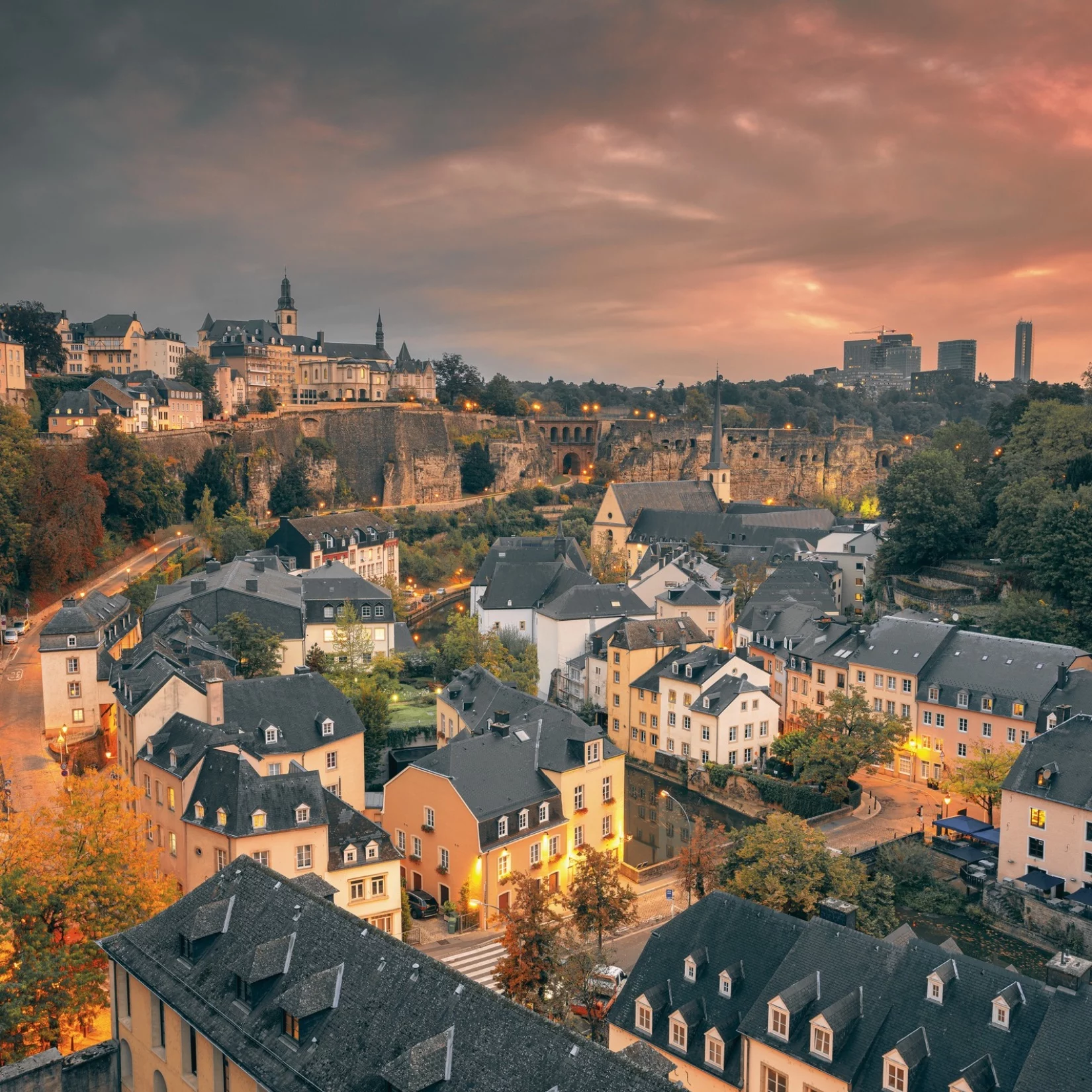
The Ville-Haute is the capital’s shopping, cultural and administrative heart, largely pedestrian, lively by day and quieter in the evening. Homes here are mostly renovated older buildings, close to the municipal parks. Below, in the Alzette valley, the Grund, Clausen and Pfaffenthal offer a unique setting: narrow streets, characterful houses, terraces by the water, paths up to the Ville-Haute. The panoramic lift links the Pfaffenthal to the plateau, and the funicular and Pfaffenthal-Kirchberg station put it a few minutes from the European district.
Who is it for? People who want to live surrounded by heritage and do everything on foot. In the valley, properties are rare and each has its own character: light, aspect and access deserve a careful visit.
The residential West: Belair, Merl, Limpertsberg, Rollingergrund-Belair-Nord
Belair, one of the most populated districts in the city, is the upmarket family district par excellence: tree-lined streets, fine houses, playgrounds and Merl park on the doorstep. Merl continues the same atmosphere, with ISL and the Geesseknäppchen school campus close by. Limpertsberg combines residential addresses, the university campus, Lycée Michel Lucius and direct access to the tram; it is the district with the highest advertised rents in the city. Rollingergrund-Belair-Nord, greener and hillier, is close to the Centre Hospitalier and a little more affordable.
Who is it for? Families who want calm, schools and green space, a few minutes from the centre.
3. The European hub: Kirchberg-Kiem, Neudorf-Weimershof, Weimerskirch
Kirchberg brings together the European institutions, banks, the Philharmonie, Mudam, shops and European School Luxembourg I, with the tram as its backbone. Housing is recent, surrounded by landscaped green spaces. Neudorf-Weimershof, below, keeps an older fabric of houses, with many new developments that explain its high asking prices. Weimerskirch, more village-like, runs along the Alzette, close to the hospitals and Dommeldange station.
Who is it for? Kirchberg professionals, European School families, lovers of contemporary architecture.
4. The lively, connected city: Gare, Bonnevoie-Nord-Verlorenkost, Bonnevoie-Sud, Hollerich
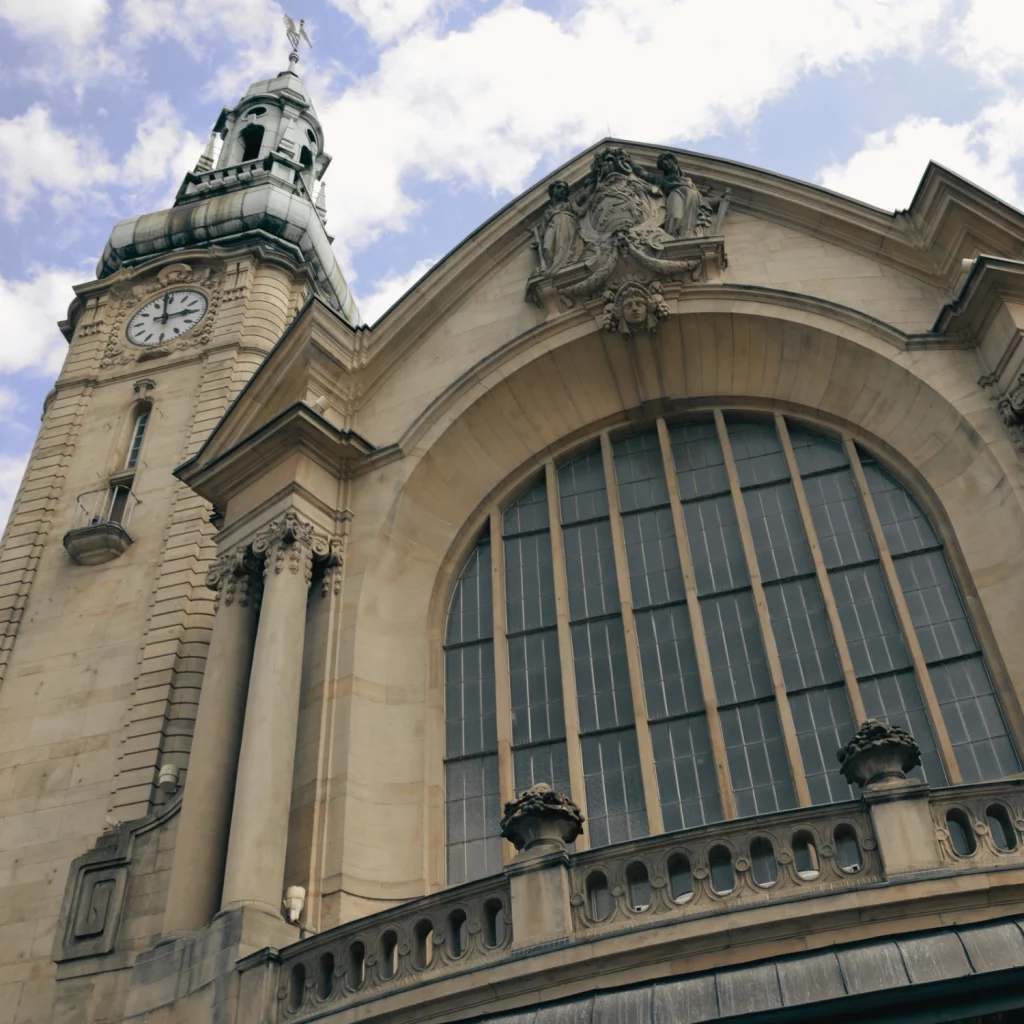
The Gare is the capital’s most urban district: the central station, the tram, shops and the Ville-Haute within walking distance, with the widest choice of homes in the centre and prices still below the most sought-after addresses. Bonnevoie, which together with Bonnevoie-Sud has become the city’s most populated district, is lively, mixed and very well connected, with its local shops and the Rotondes. Hollerich mixes homes, offices and former industrial sites in full transformation.
Who is it for? Young professionals, couples, people who want to do everything on foot or by tram and enjoy the energy of a district on the move.
5. The new South: Gasperich, Cessange
Gasperich has been transformed by the Cloche d’Or, the Ban de Gasperich, the new stadium and the Lycée Vauban campus, all served by the tram. Homes here are recent and comfortable, with the green spaces of Kockelscheuer close by. Cessange, more residential, enjoys its park and immediate motorway access.
Who is it for? Lycée Vauban families, people working at the Cloche d’Or, those who prefer new builds.
6. The quiet East: Cents, Hamm, Pulvermühl
Cents is a calm residential district, close to the airport as well as to the Grund and Clausen, where the price per m² remains the gentlest in the city among districts with a substantial number of sales. Hamm and Pulvermühl run along the Alzette, with green spaces by the water, quick motorway access and St George’s International School nearby.
Who is it for? Families looking for more space for their budget without leaving the capital.
7. The green North, along the Alzette: Eich, Dommeldange, Beggen, Mühlenbach
These districts live at nature’s pace: the Bambësch forest, the Eecherfeld, Dommeldange hill and the banks of the Alzette. Dommeldange keeps a village feel around its station, and the city is preparing the River Place project there, with 92 coliving rooms by the end of 2027. Rents here are among the most affordable in the capital.
Who is it for? Nature lovers, tighter budgets, people who want the city without its density.
International schools in the city
- European School Luxembourg I, Kirchberg
- International School of Luxembourg (ISL), Merl
- St George’s International School, near Hamm and Pulvermühl
- Lycée Vauban, French curriculum, Gasperich
- Lycée Michel Lucius, English-language international section, Limpertsberg
- École internationale Gaston Thorn, Cessange and Merl
- Athénée de Luxembourg, International Baccalaureate in English, Merl
- European School Luxembourg II is just next door, in Mamer and Bertrange, in the West.
Our method for choosing among Luxembourg City districts
- Start with the school, if you have children. European School I: Kirchberg, Neudorf, Limpertsberg. ISL and Athénée: Merl, Belair, Hollerich. Lycée Vauban: Gasperich, Cessange, Bonnevoie.
- Set a realistic budget. Around €12,000 to €13,500/m²: Belair, Neudorf-Weimershof, Gasperich, Limpertsberg. Around €11,000 to €12,000/m²: Ville-Haute, Merl, Hollerich, Kirchberg. Around €9,000 to €11,000/m²: Gare, Bonnevoie, Cents.<br/>
- Follow your lifestyle. Families: Belair, Merl, Limpertsberg, Cents, Cessange. Everything on foot or by bike, with the self-service vel’OH! bikes an elegant way to get around: Ville-Haute, Gare, Bonnevoie, Hollerich. Nature: Dommeldange, Beggen, Eich, Mühlenbach. Character: Grund, Clausen, Pfaffenthal. If you work in Kirchberg or at the Cloche d’Or, living near the tram frees you from the car.
- Visit at different times of day. A district that is quiet at 10 am can be busy at 6 pm, and Saturday morning feels nothing like Monday evening. Walk, look, listen.
- Work with someone who knows the ground. That’s where we come in: we start from who you are, how you live and what you are really looking for. The streets, buildings, co-ownerships and micro-markets of the city are what we know.<br/>
The deciding question
Are you ready to pay the Luxembourg City price for proximity, international schools, cultural life and an efficient daily routine? If so, the capital becomes an investment in your quality of life. If not, the North, the East, the West or the South will give you more space for the same budget.
The “Where should you live in Luxembourg?” series
- The North, for nature and quiet
- The South, urban and connected
- The East, between town and country
- The West, everyday convenience close to the city
- Luxembourg City, twenty-four districts
The Grand Duchy measures 82 km from north to south and 57 km from east to west. Yet across those 2,586 km², prices per square metre double between the North and the most sought-after districts of the capital. The choice of region, then of district, will shape your quality of life for years.
Our series “Where should you live in Luxembourg?” helps you make it: the North, the South, the East, the West and Luxembourg City. We update these guides over time and will let you know when we do. We are adding portraits of the districts of the capital where we work, with the Gare and Belair already covered.